
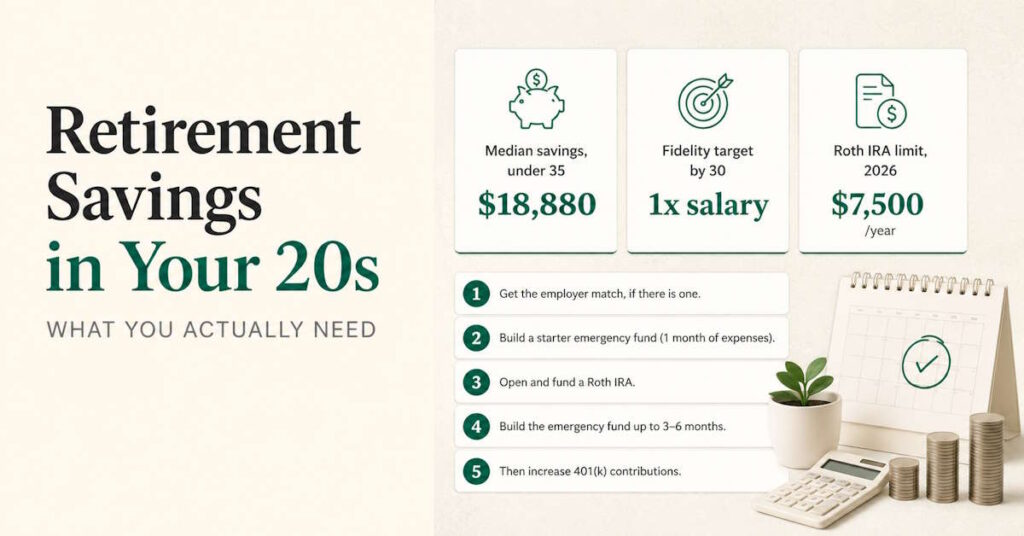
Saving for Retirement in Your 20s: How to Start
Saving for retirement in your 20s? See what to do first, how much to contribute, how to use an employer match, and how to balance debt and emergency savings.
Investing is how you turn money you have today into money that works for you tomorrow. But it’s also where most people get stuck — confused by jargon, intimidated by stock charts, or scared off by sensational headlines about market crashes. The Investing Basics category at FreshWealth HQ exists to demystify the fundamentals. We focus on long-term, evidence-based strategies that actually work for regular people — index funds, retirement accounts, dollar-cost averaging, and the math of compound growth. No day-trading hype, no crypto gambling, no “get rich quick” promises. Just the clear, boring truth about how wealth actually gets built over decades. You’ll find guides on how to start investing with $100, how to choose between Roth and traditional retirement accounts, what asset allocation means and why it matters, and how to avoid the most common investing basics mistakes. Every article reflects current realities — current IRA contribution limits, market conditions, and the latest research on what works for individual investors. Start where you are, with what you have, today.
Saving for retirement in your 20s? See what to do first, how much to contribute, how to use an employer match, and how to balance debt and emergency savings.
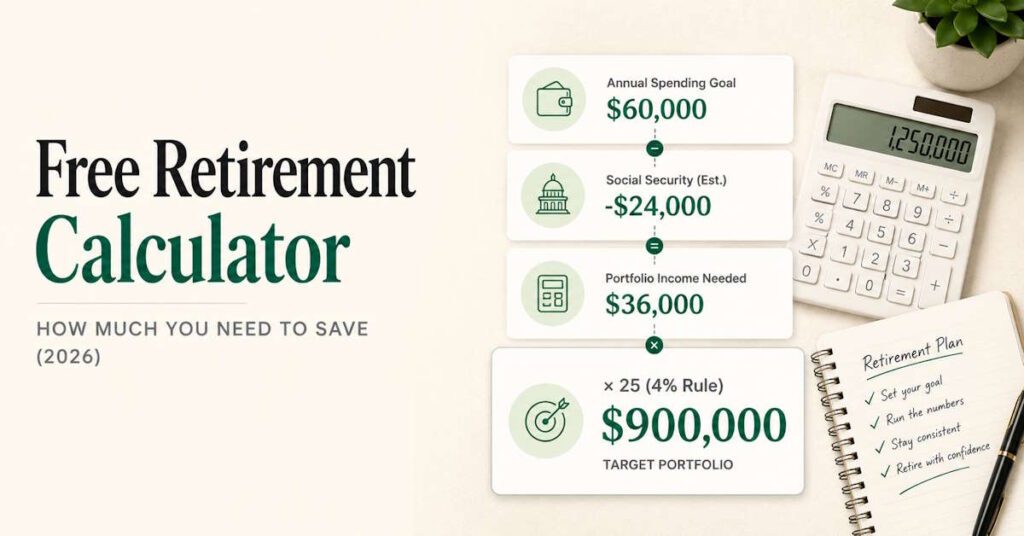
A free retirement savings calculator that estimates your target portfolio, projected balance, required monthly contribution, and whether you’re on track.
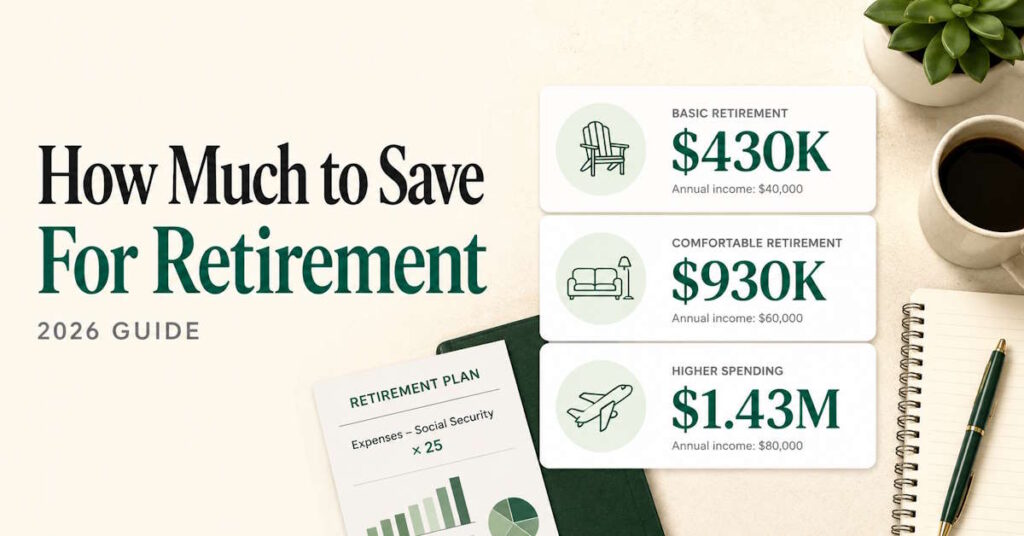
A methodology for finding your own retirement number: spending, Social Security, the 4% rule, and how much to save each year, without relying on a survey average.
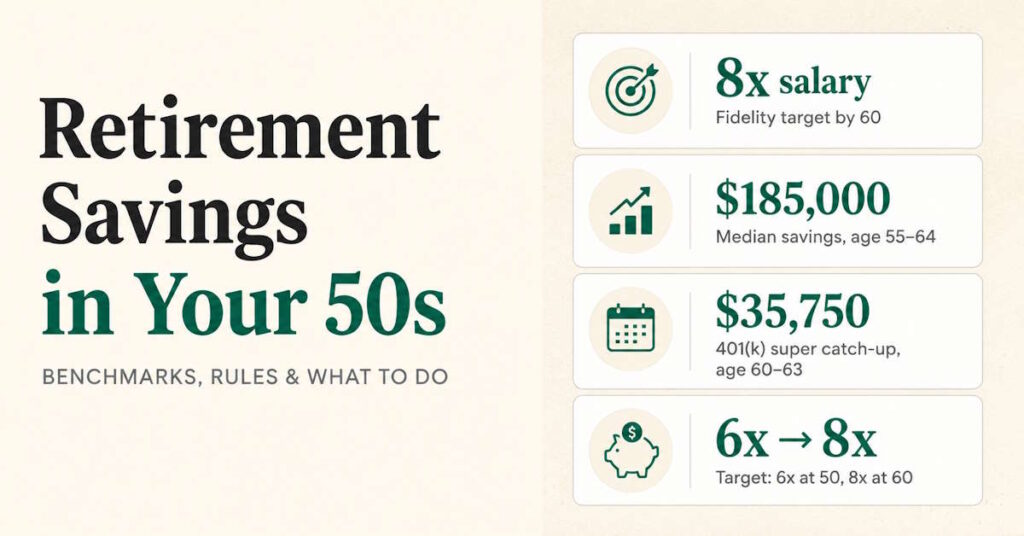
A focused, action-first guide to saving for retirement at 50: how much you actually need, the 2026 catch-up limits, employer match, and Social Security timing if you’re behind on savings.
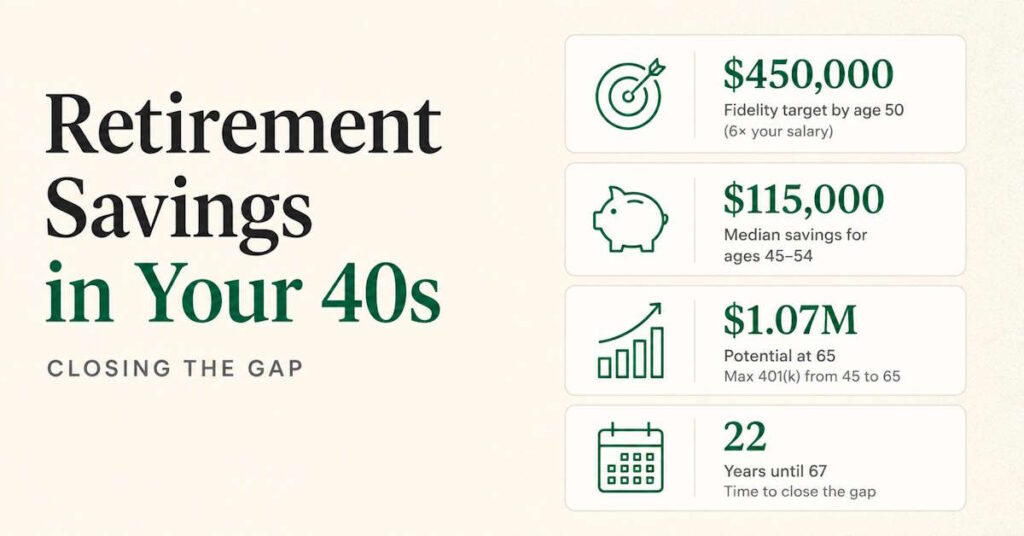
Starting retirement savings at 40? What to do first, realistic catch-up scenarios, how much to save monthly, and how to prepare for age-50 catch-up contributions.
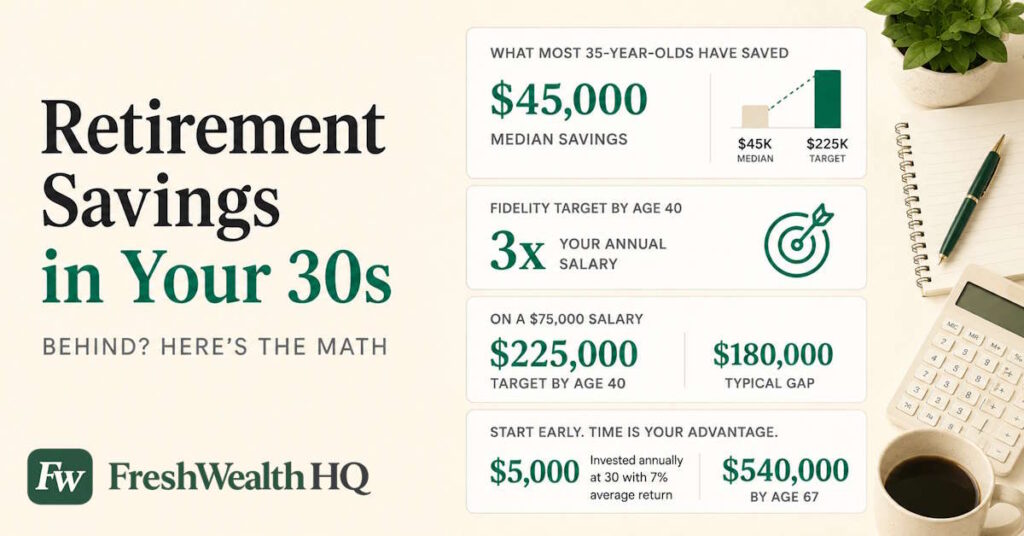
Starting retirement savings at 30? What to do first, how much to contribute, how to use your employer match, and how to build momentum through your 30s.
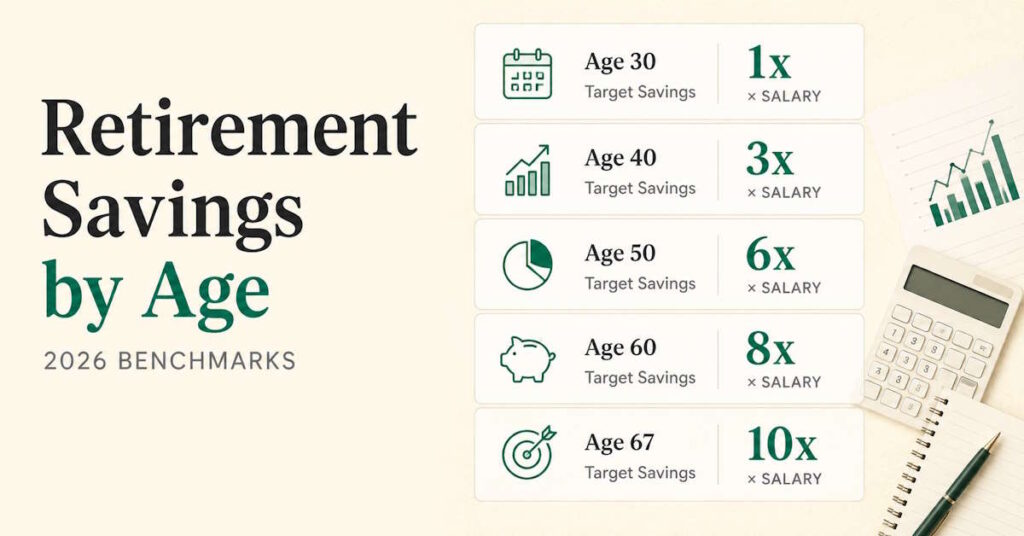
Fidelity’s recommended retirement savings milestones by age, compared with actual Federal Reserve median and average balances and current 401(k) data.
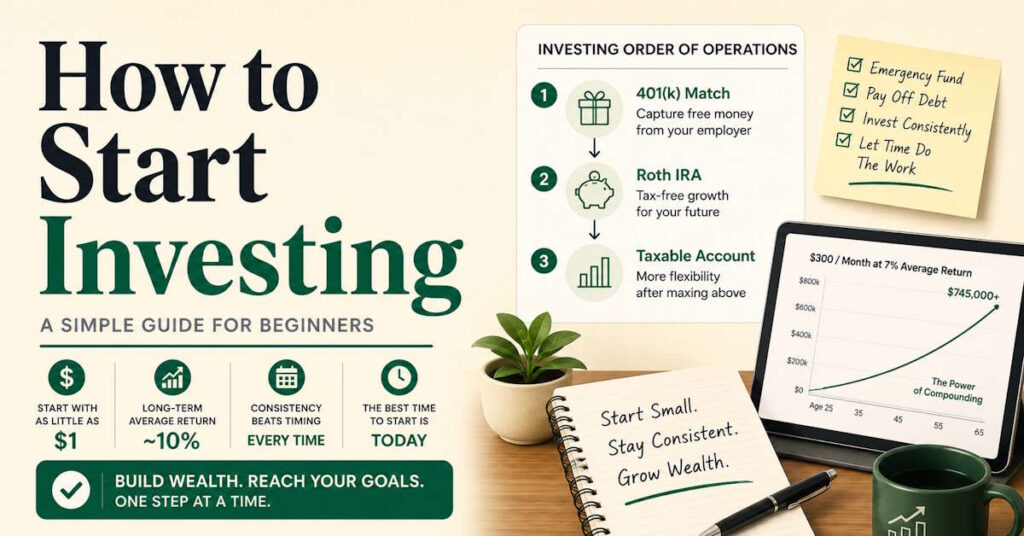
A beginner-friendly framework for how to start investing in 2026: protect your cash flow first, compare account tax treatment, match your asset mix to your risk tolerance, then automate contributions with realistic, sourced numbers.